Senspace app
2025 > 2026
Senspace
JP
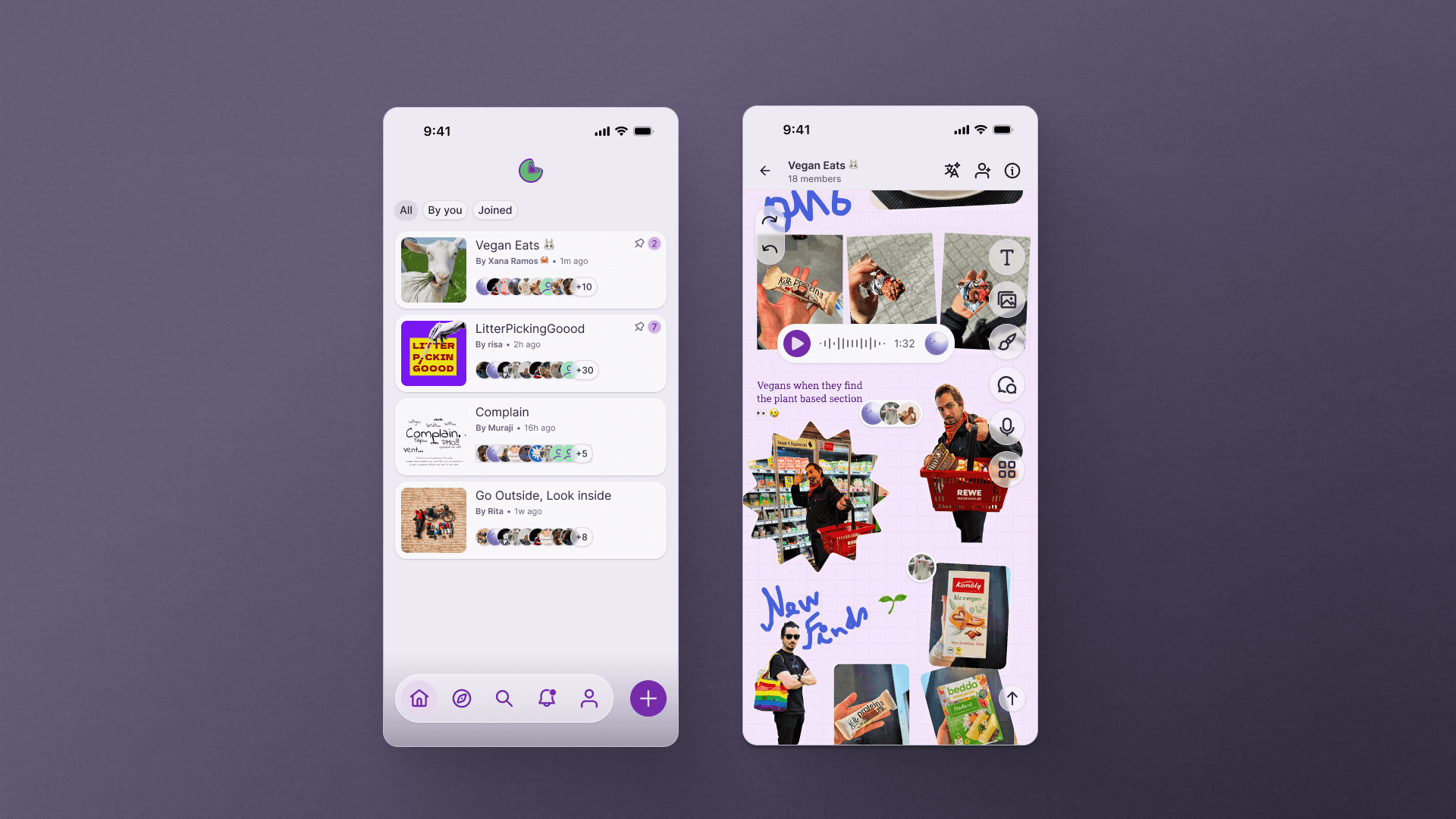
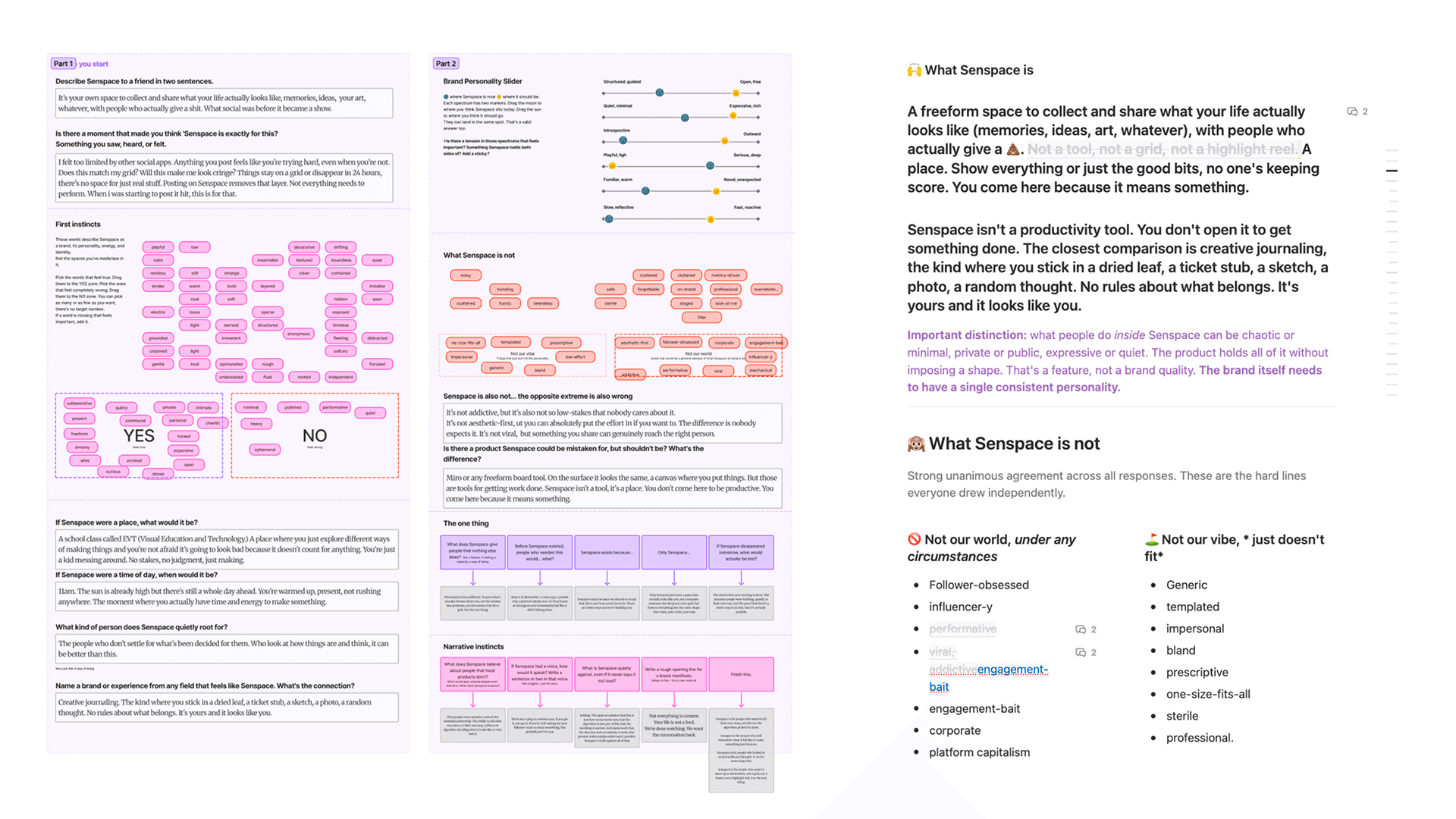
Senspace is a freeform social space where people collect and share their life, memories, ideas, art, with people who actually care. Think journaling meets social, without the algorithm. Not a feed, not a grid. A place.
I joined as Lead Product Designer, working directly with the CEO and co-founder in a small team. I built the design practice from the ground up. All of it in 5 months.
+69%
Monthly active users
×2
Avg daily active users
Dec to Apr 2026
01 WHERE IT STARTED
The problem
Social media had a decade to get it right. Instead it optimized for time-on-screen, turned people into content, and called it connection. Senspace was built as a refusal. A place to actually share your life with people who matter, not perform it for an algorithm.
The idea was right. The product wasn't there yet.
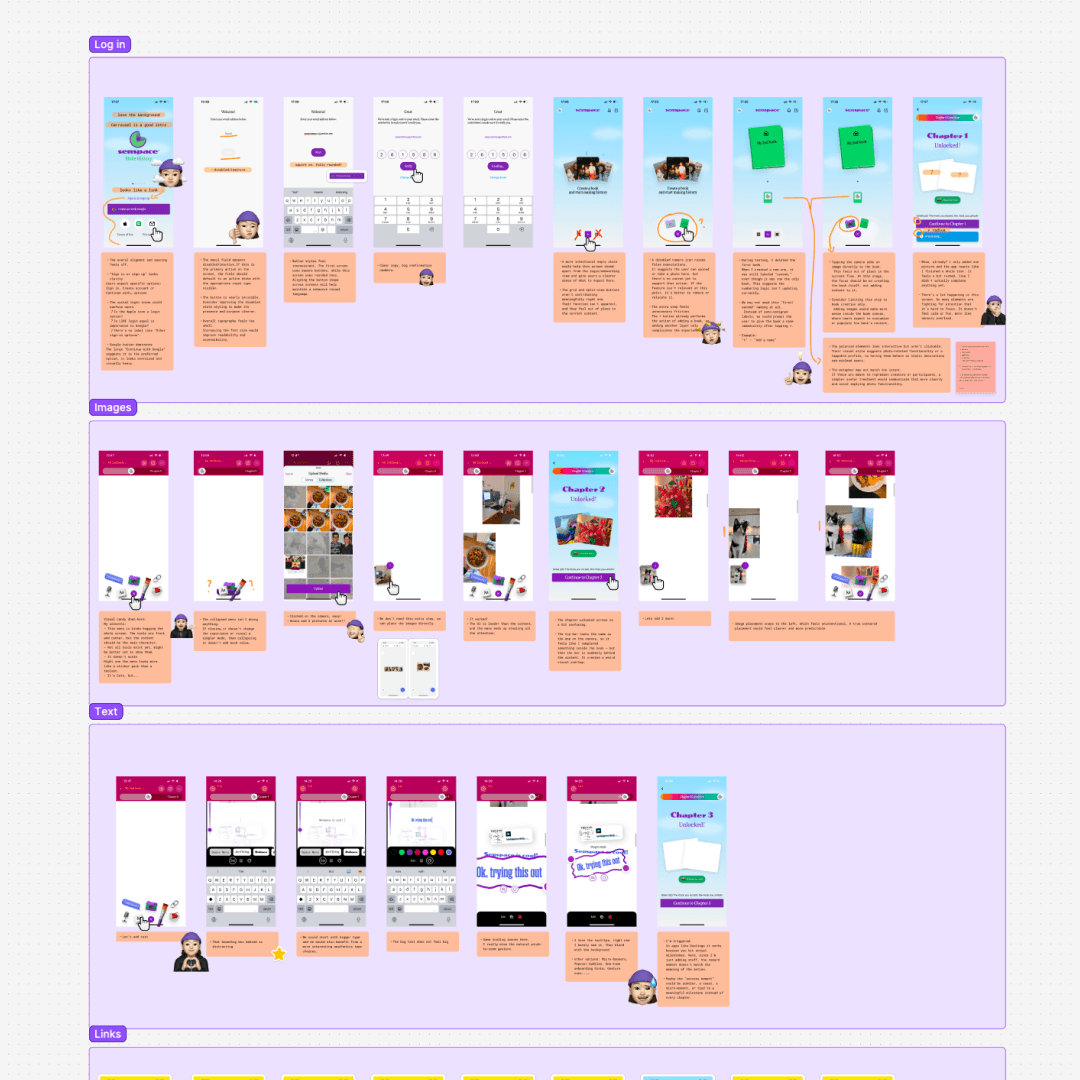
When I joined, the app existed but it wasn't really usable. No design system. No research practice. No shared visual language. Inconsistent foundations, color, type, components not working from the same logic. Flows that confused people at every step. Retention was effectively zero.
02 FIRST, LISTEN
Audit & research
The audit came first. Every screen, every flow, documented. Not to list problems, to map them. What was broken, where, and why.
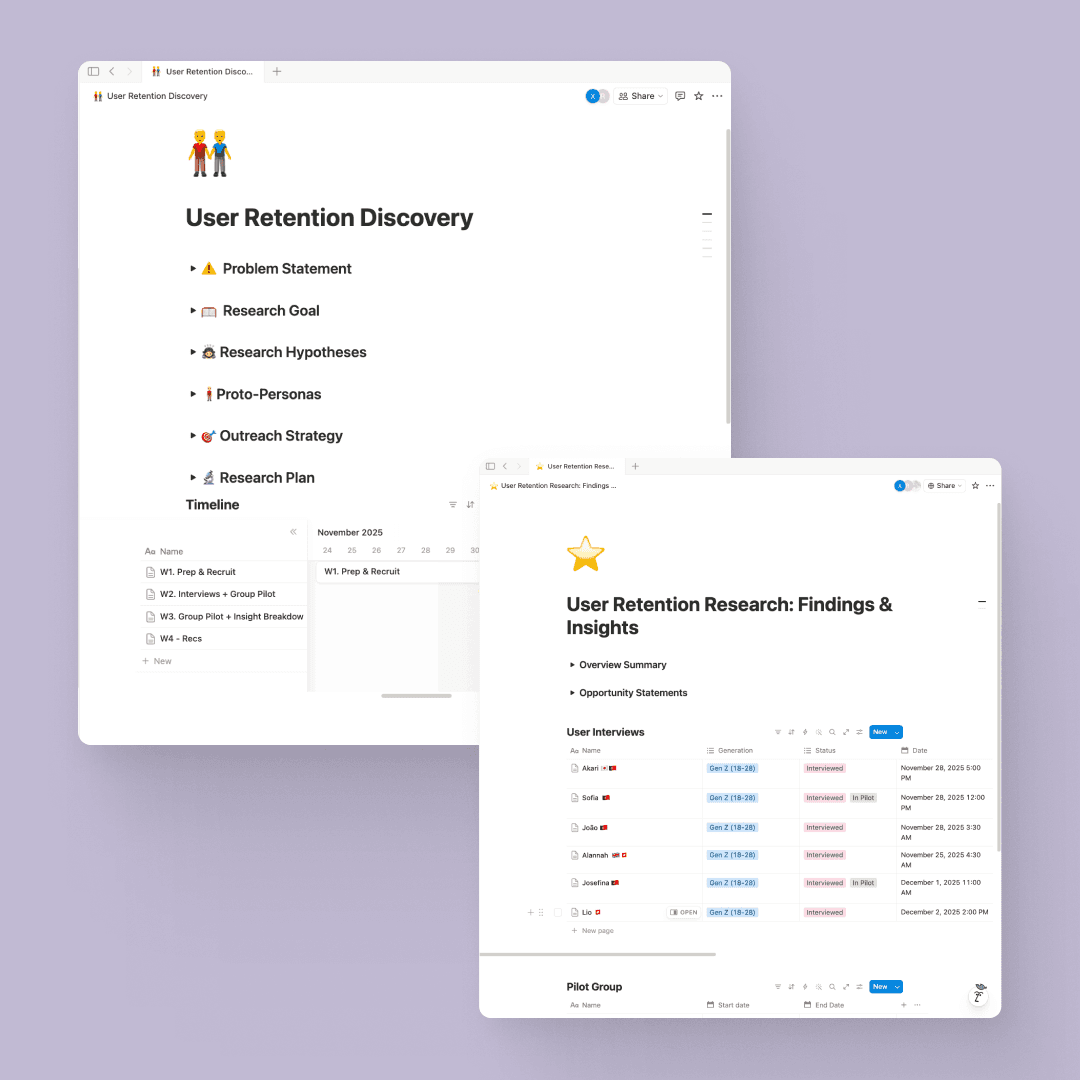
Then research. Before redesigning anything, I talked to people. Six interviews, Gen Z participants across Portugal, Switzerland, and the UK. Then pilot groups, real people using Senspace together over two weeks. The friction wasn't the concept. The app was getting in its own way.
That research became the source of truth for everything that followed: what to fix first, what to build next, why.
03 WHAT CAME FIRST
Prioritization
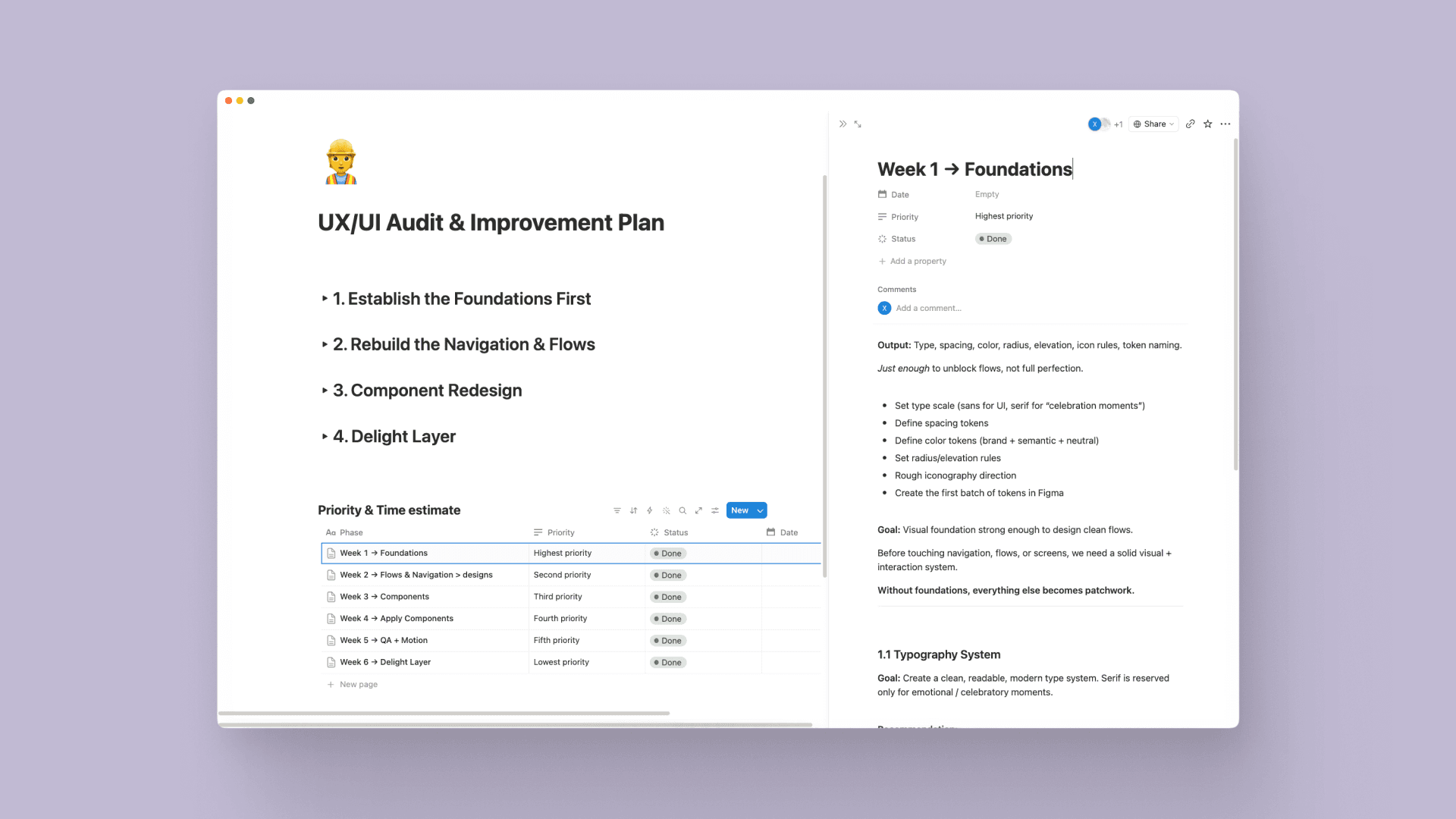
With a small team and no runway to waste, everything had to be sequenced right. Fix the foundation before adding features. Build the system before building the screens. Get the core experience working before expanding it.
The audit and research shaped a six-phase improvement plan: foundations, navigation and flows, component redesign, applying components, QA and motion, delight layer. In that order, for a reason.
04 GROUND UP
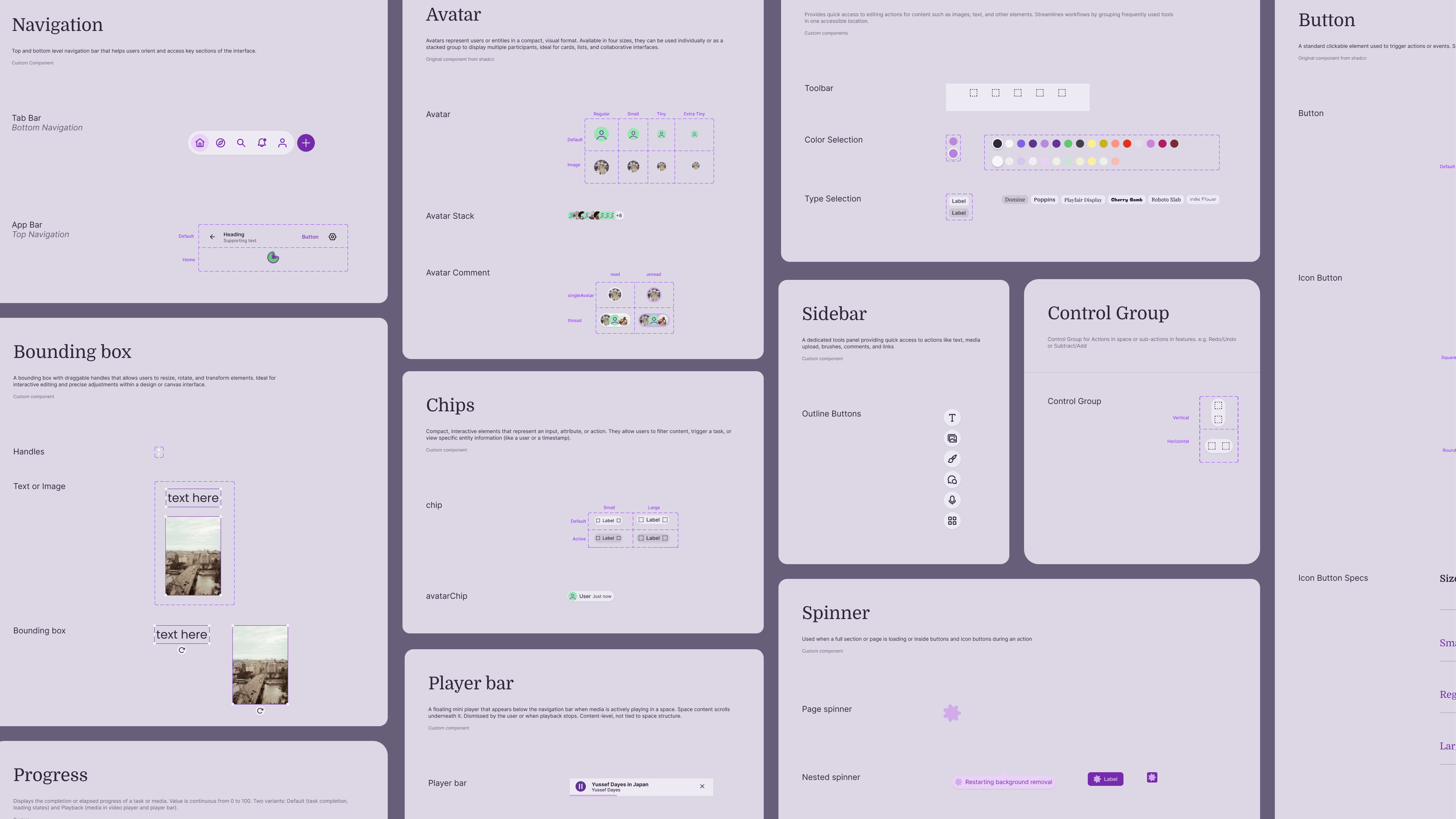
Design system
The app was using brand typefaces and brand colors directly as UI decisions. Licensed display fonts. Brand purples applied to interactive states, backgrounds, error messages. No semantic layer. No system.
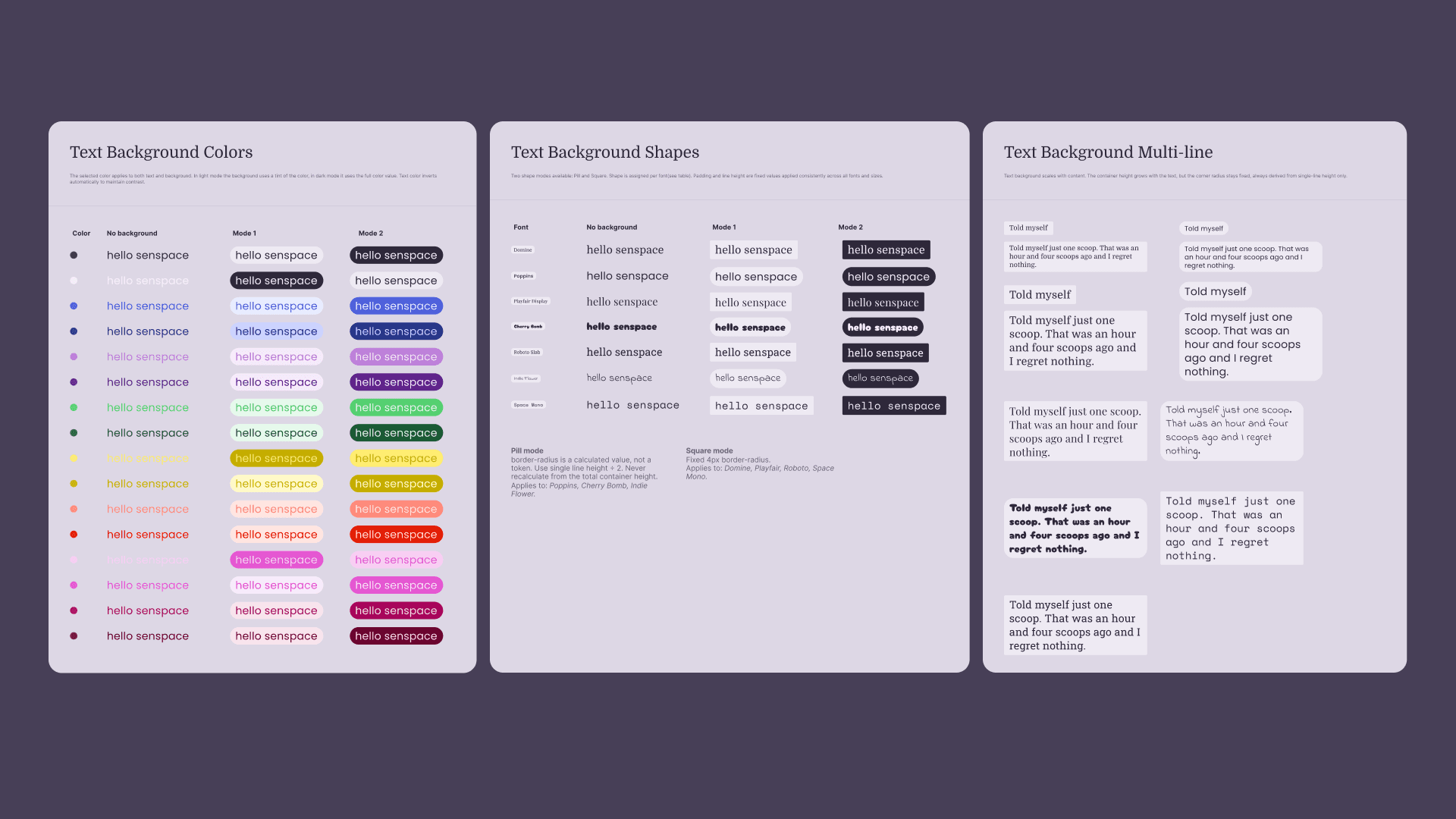
I stripped it back. Rebuilt the color palette around semantic roles, primary, success, warning, error, with a proper neutral scale for surfaces. Replaced the brand typography with system-appropriate type. Separated what Senspace looks like from what the interface communicates.
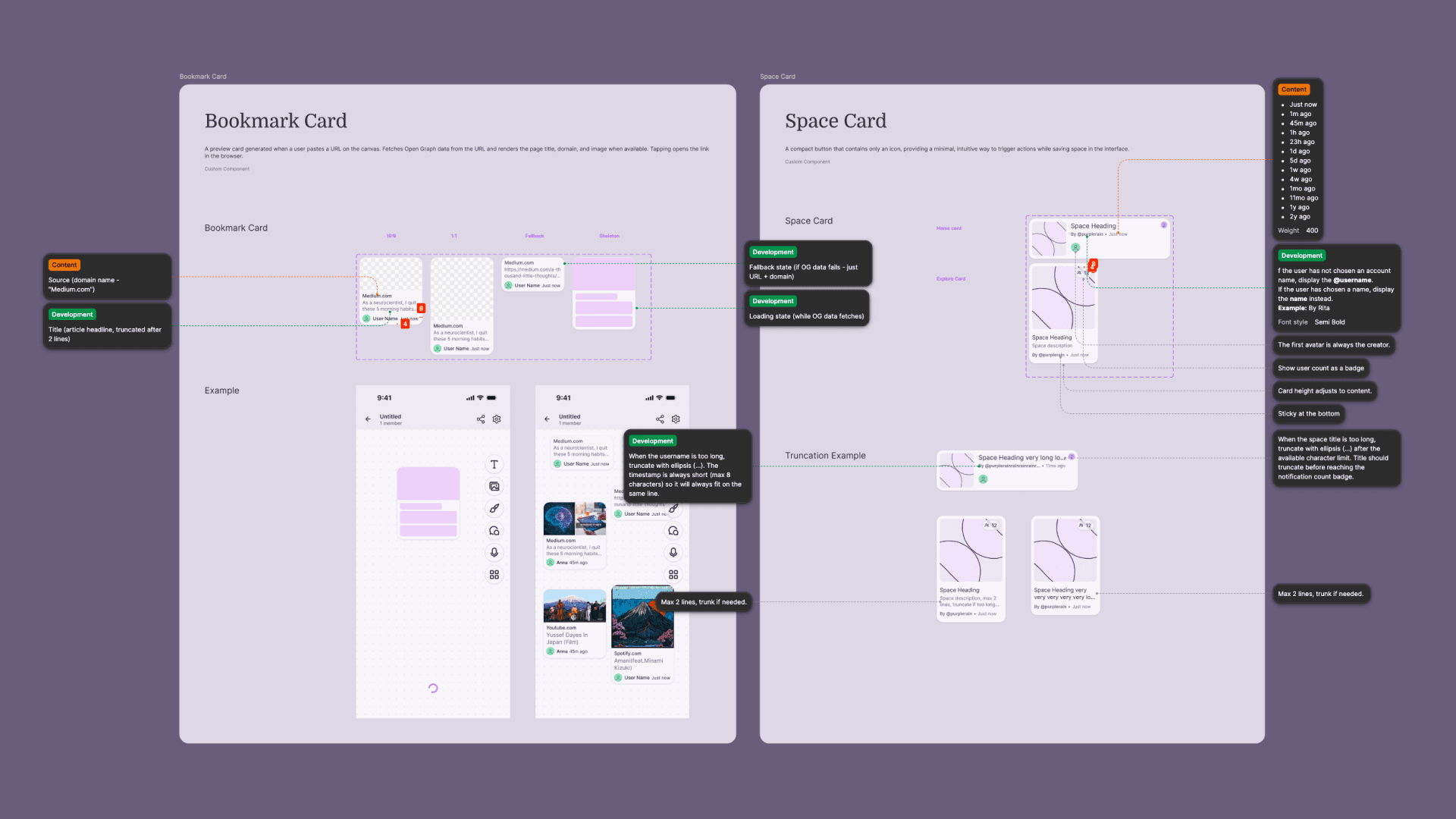
Then the design system, built from scratch. Variables, tokens, spacing, iconography, shadows, illustrations. Components documented, variant-complete, production-ready. A file structure, naming conventions, a Linear setup so nothing fell through the cracks. Every design handed off via Figma Dev Mode with annotations. Tickets written, tracked, and QA'd once built.
05 BUILDING IT
The redesign
With the system in place, the full product was rebuilt. Not polished. Rebuilt. Strip back to basics, define what the core experience needed to be, and build from there.
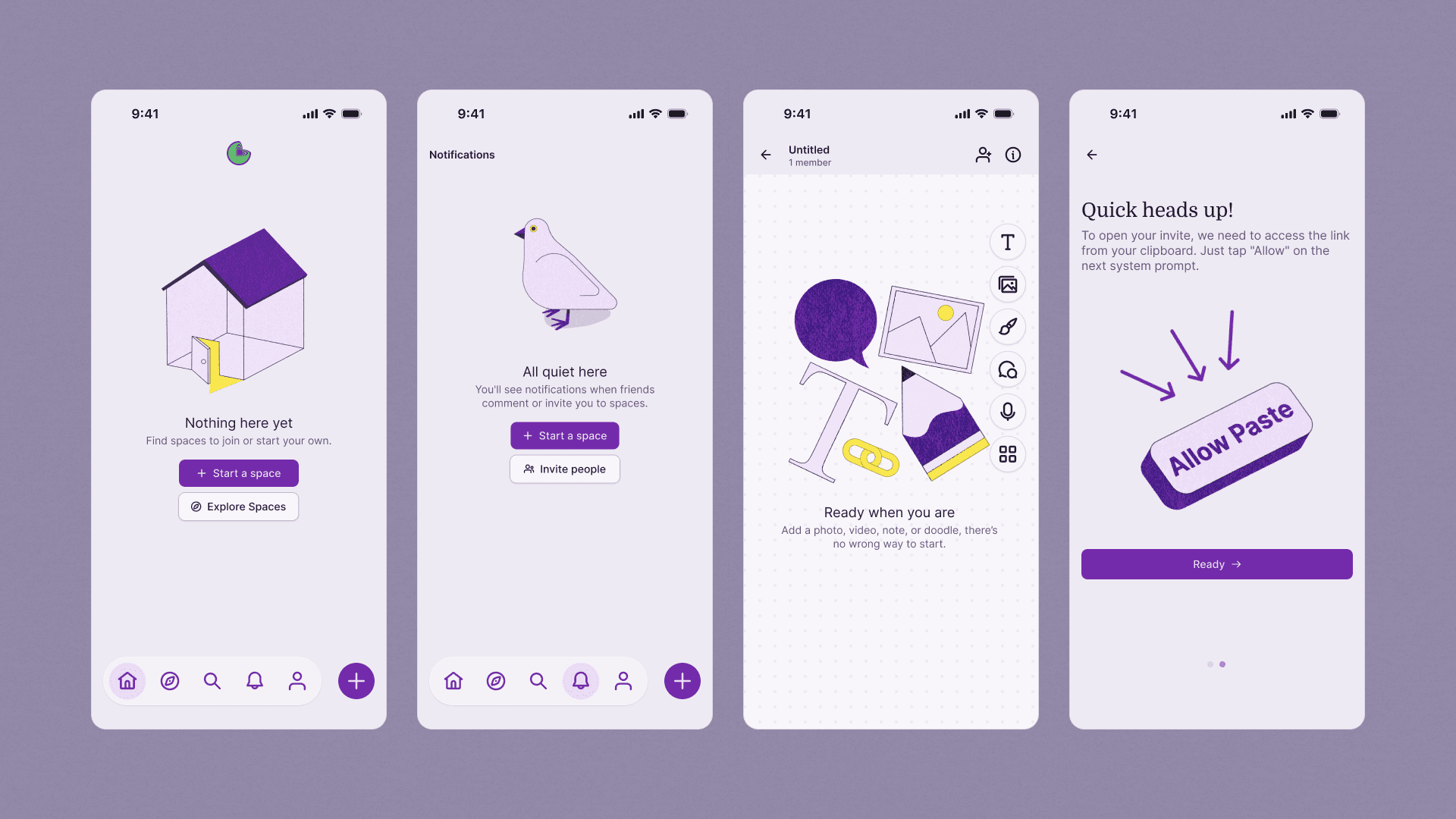
Everything was touched. Login, onboarding, the home screen, the canvas, settings. Every toolbar tool redesigned. New comment experience, user management, invite flows. Video extended from 20 seconds to 2 minutes, with a rebuilt crop, preview, and media picker experience. Improved notifications and loading throughout.
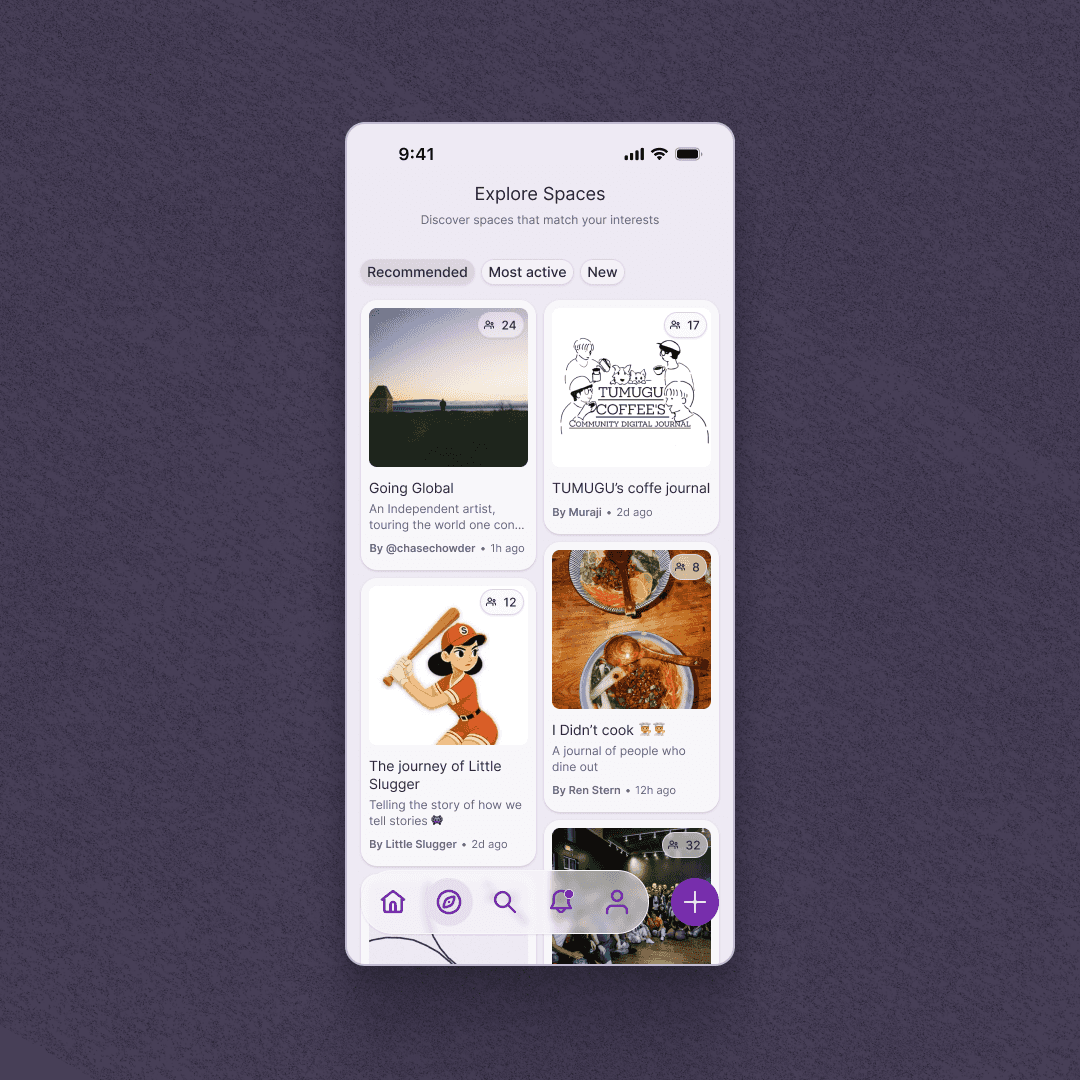
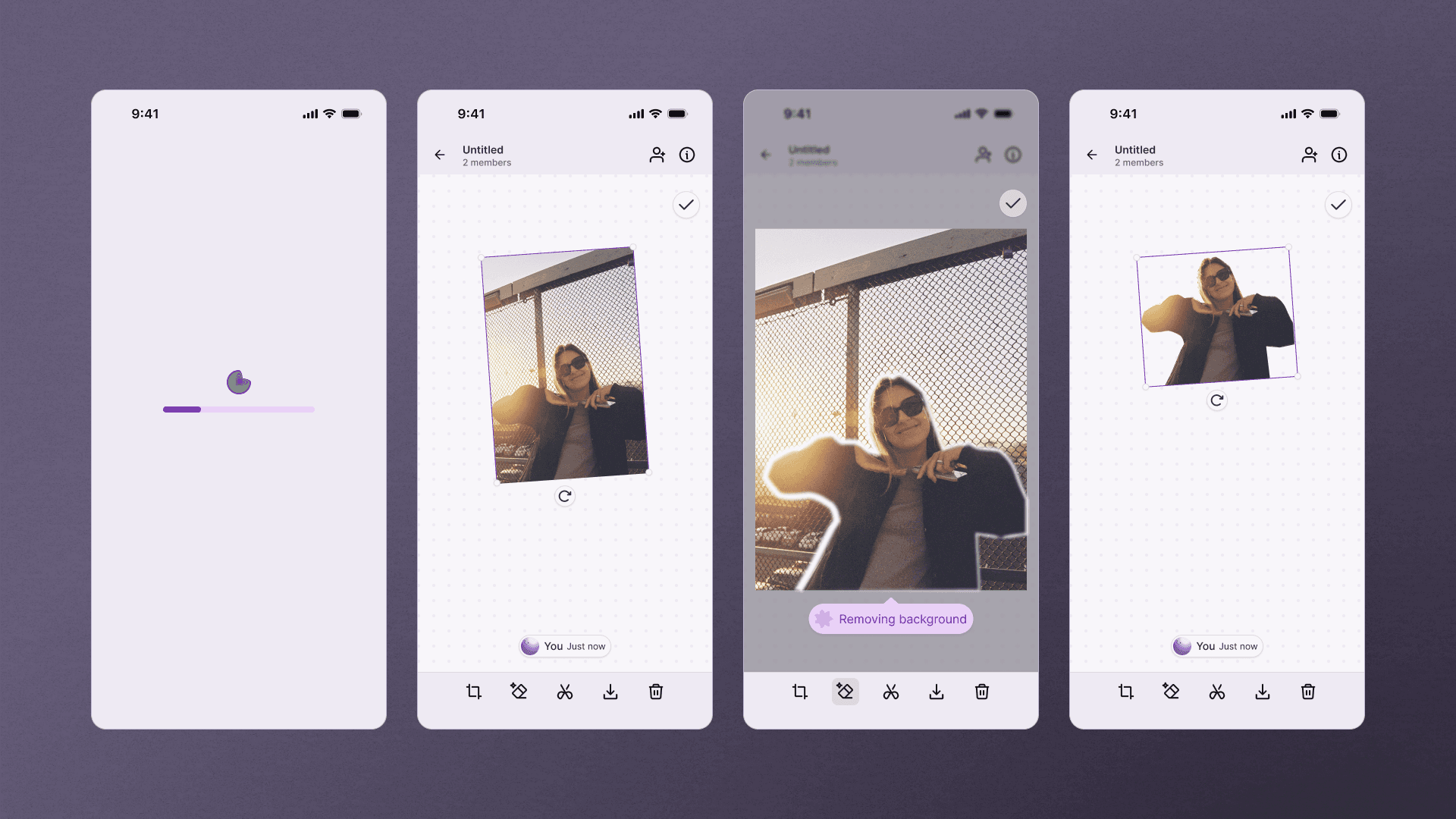
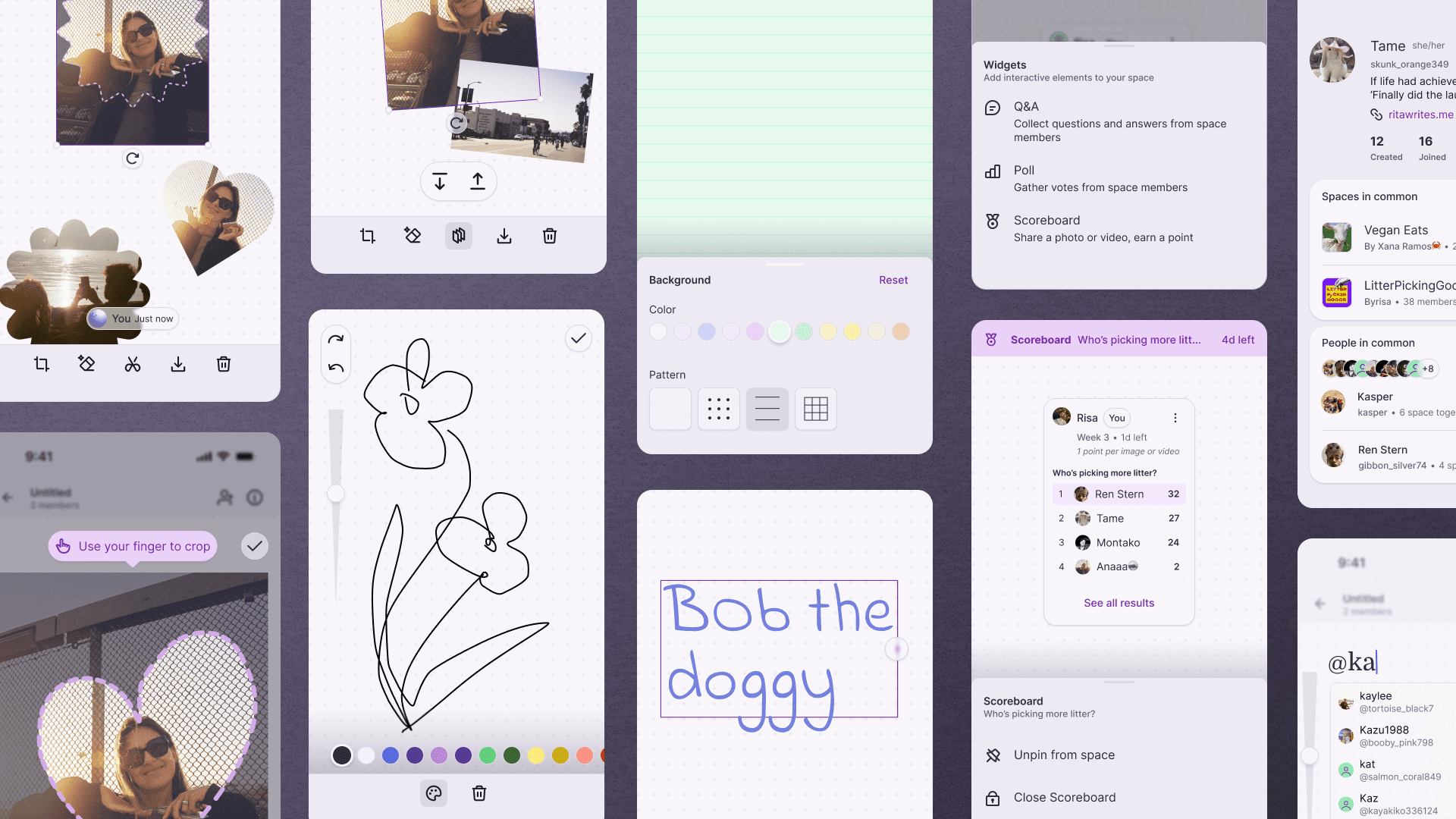
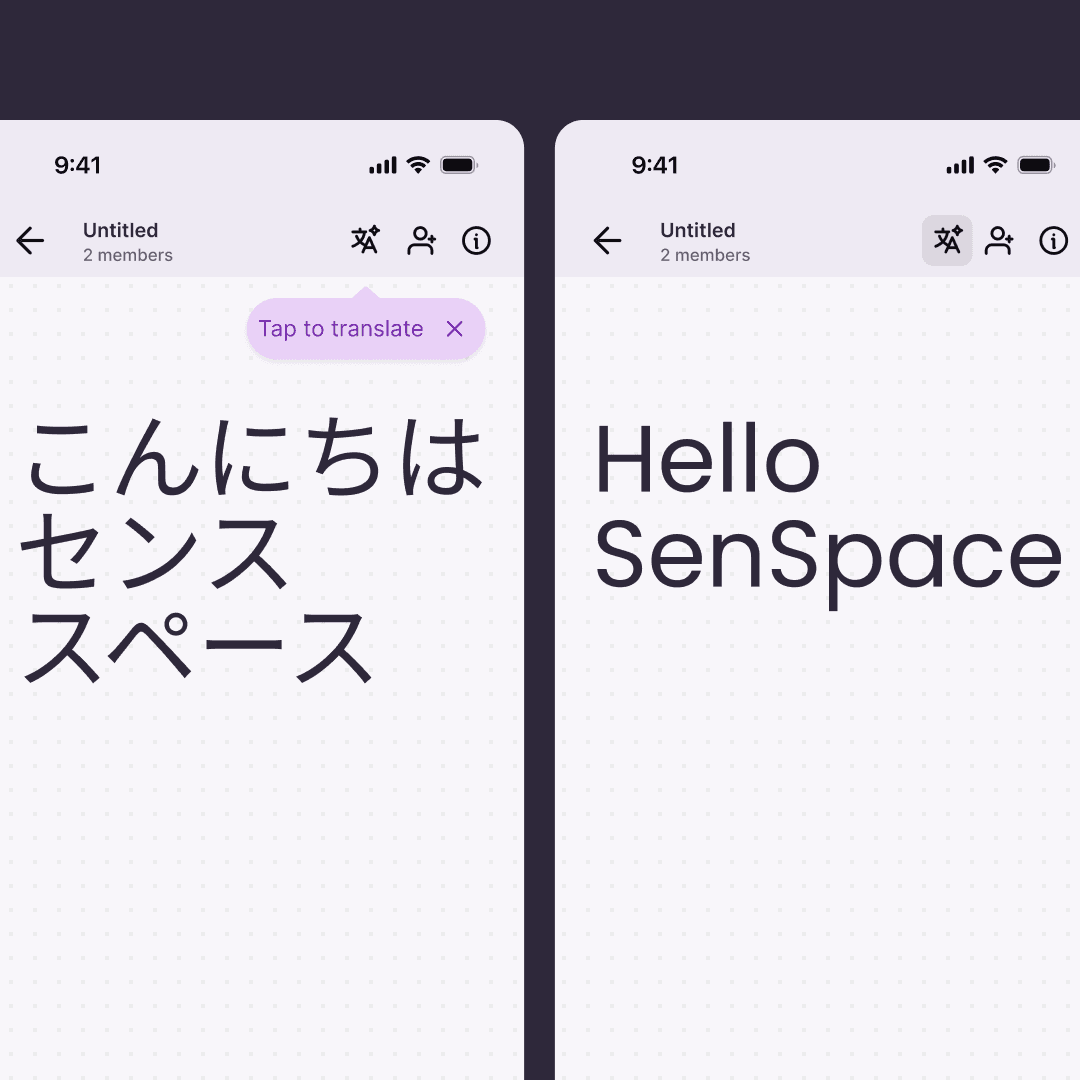
New features built on research: canvas boundaries, snapping, gesture systems, transform tools, AI background removal, image masking, background customization, voice note, Explore, public and private spaces, global search, poll, Q&A and scoreboard widgets, canvas actions that didn't exist before, date-based navigation, direct canvas translation, community rules, web-gated preview, filters and pinning.
Prototyping in two phases. Early wireframes with Claude, higher fidelity with Figma Make connected to the design library. Execution always in Figma.
06 WORDS MATTER TOO
Copy & voice
Once the product had a foundation, everything else followed.
Voice and tone workshops with the team. A consolidated copy guide. Every screen in the app rewritten, onboarding, empty states, error messages, settings, all of it. A notification formula system so copy could scale consistently as the product grew. Full translation across six languages: Portuguese, Spanish, French, German, Mandarin, and Japanese. A separate typography pass for Japanese, Latin typeface decisions don't carry over.
The Senspace website, designed and built in Framer, with a motion prototype for the hero. The App Store listing, screenshots composed and copy written.
07 IN THE WILD
Community
By Risa
Picking up litter with chopsticks, people joining from around the world.
GLOBAL · ACTIVISM
By Risa
Food, restaurants, product finds, and rambles.
FOOD · LIFESTYLE
by Kasper
1,700 km bike packing across Japan, journaling the whole way.
TRAVEL · JOURNAL
By Maaya
A personal diary. Food, coffee, and everyday moments.
JOURNAL · LIFESTYLE
By Montako
This year's Golden Week travel log across Germany, Switzerland, and Italy.
TRAVEL · JOURNAL
06 WHERE IT LANDED
Outcomes
Growth doesn't happen in a vacuum. Alongside the product work, the team ran community activations, events and ambassador programs, that brought new people in. Design's job was to make sure they stayed.
Monthly active users grew 69%, from 166 to 280. Daily active users nearly doubled.
Monthly active users
Jan to Apr 2026
Avg daily active users
Building something that genuinely puts people first is hard to sustain. Not because the idea is wrong, because the economics work against it. Senspace was never going to make money fast, and in a world that needs returns, that matters more than it should.
I'm grateful I got to work on it. A product built for people, not for engagement metrics. A space that asks nothing of you except to show up.
I hope Senspace finds its community and the momentum to keep going. The alternative to what's out there is worth building. Someone just has to be able to afford to.